Civil Aviation Authority
Radio Operator’s Certificate Of Competency
Offshore Communication Service
ROCC OCS
Civil aviation authority radio operator’s certificate of competency offshore communication service ROCC OCS
The Radio Operator’s Certificate of Competence (ROCC) is a document issued by the CAA after an applicant has passed certain written and practical examinations that have demonstrated their competence to safely and correctly operate an aeronautical radio station.
The requirement to hold a ROCC is applicable to those operating aeronautical radio stations in the following circumstances:

On the UK Mainland
On the internal waterways of the UK Mainland
Within the UK's territorial waters; and/or
Within the limits of the UK's continental shelf.
An Individual must hold a ROCC if they are providing any of the following:
AFIS
AGCS
OCS
Information for parachutists
Clearances as part of the Clearance Delivery Officer (CDO) task
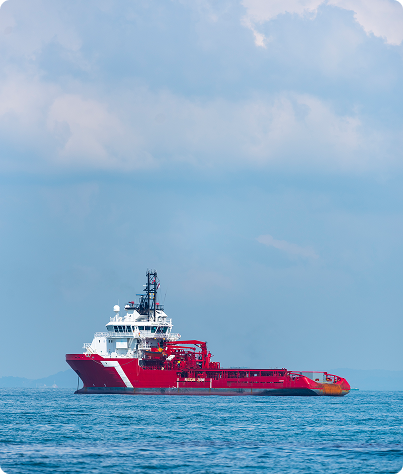
In particular, offshore, a ROCC is required to be held by Helideck Landing Officers (HLO), Helideck assistants, crews of Emergency Response and Rescue Vessels (ERRV) and persons on other support or supply vessels who are required to operate VHF aeronautical radio equipment in UK Internal Waters, UK Territorial Waters or within the limits of the UK Continental Shelf.
The minimum age for the issue of a Radio Operator’s Certificate of Competence is 18 years.
No medical certificate is required in order or the holder of an ROCC to operate an aeronautical radio station.
The UK CAA does not currently approve any training courses associated with written or practical examinations for the issue of any ROCCs.
The Restricted (VHF only) Radiotelephone Operator’s Certificate, Maritime Radio Operator’s Certificates or other Radio Operator’s qualifications issued or obtained inside or outside the UK are not accepted to allow exemptions from completion of the relevant written or practical examinations to obtain a UK ROCC.
ROCC holder responsibilities
A ROCC holder is not entitled to provide instructions to a pilot however they do have a ‘duty of care’ to provide safety critical information as soon as available, this includes flight safety messages and timely safety information regarding adverse weather to an aircraft in flight or about to depart. The information provided by an AGCS/OCS radio station operator may be used to assist a pilot in making a decision; however, the safe conduct of the flight remains the pilot’s responsibility.
Offshore Communication Service (OCS)
OCS radio station operators provide messages to helicopters operating in the vicinity of offshore oil rigs, platforms and vessels through the use of aeronautical radio stations and Non-Directional Radio Beacons (NDBs) located on these installations.
Course
The course will provide both the theoretical and practical training required to sit the examinations for the CAA Radio Operator’s Certificate of Competence (ROCC) qualification. This is required by operators of offshore-based radio equipment where an air-to-ground radio service is provided.
The course is in minimum two parts. Day One is made up of the core training and radio procedures practice, leading to practice for the written and practical examination. Day two will consist of the CAA written and practical examinations (depending on number of candidates practical examination can take two days).
The Written Test has around 25 open questions. They require written answers (not multiple choice). Time allowed one hour. Pass mark is 75%.
The Practical Test is a simulation of operations at a typical offshore location, covering all the scenarios a radio operator is likely to encounter, including initial radio calls, departures and arrivals, unexpected arrivals, oil spill reporting and emergencies. The candidate assumes the role of radio operator, the examiner is everyone else. There is no time limit on this test, but it normally takes 30-40 minutes.
The written and practical examinations will be conducted in the English language. The use of reference material such as notes, dictionaries and translators is not permitted during either of the examinations.
On successful completion of the exam, the Examiner will sign off the application and will submit the exam paperwork to the CAA, with a recommendation that the applicant be issued an ROCC OCS.
What do you need to do before a course?
Be familiar with CAP413, the CAA Radiotelephony Manual
Be familiar with CAP 452, the Radio Station Operators Guide
Be familiar with CAP 1430, the Vocabulary
Learn the basics of words & numbers phonetics, radio procedures & practice aviation abbreviations.
We can provide you with copy of above documents (available also on the CAA web page) as well as with learning notes. These notes are not a substitute for the above publications but are intended as an aid to understanding, with particular emphasis on the Offshore Communications Service.
If you are taking the short course in advance of the examination, be aware that the course is very intensive and covers a lot of material – in order to maximise your chances of success, pre-course learning is absolutely essential, particularly the phonetic alphabet and number pronunciation. Phonetic alphabet, the list of standard phrases and emergency communication procedures – you can expect to be tested on these subjects very early on in the course.
Course Content
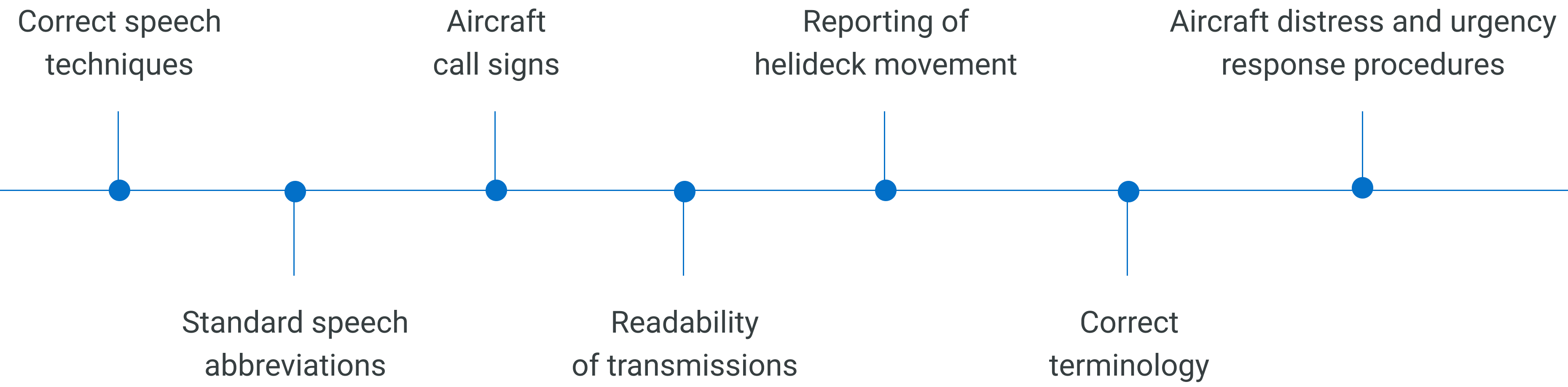
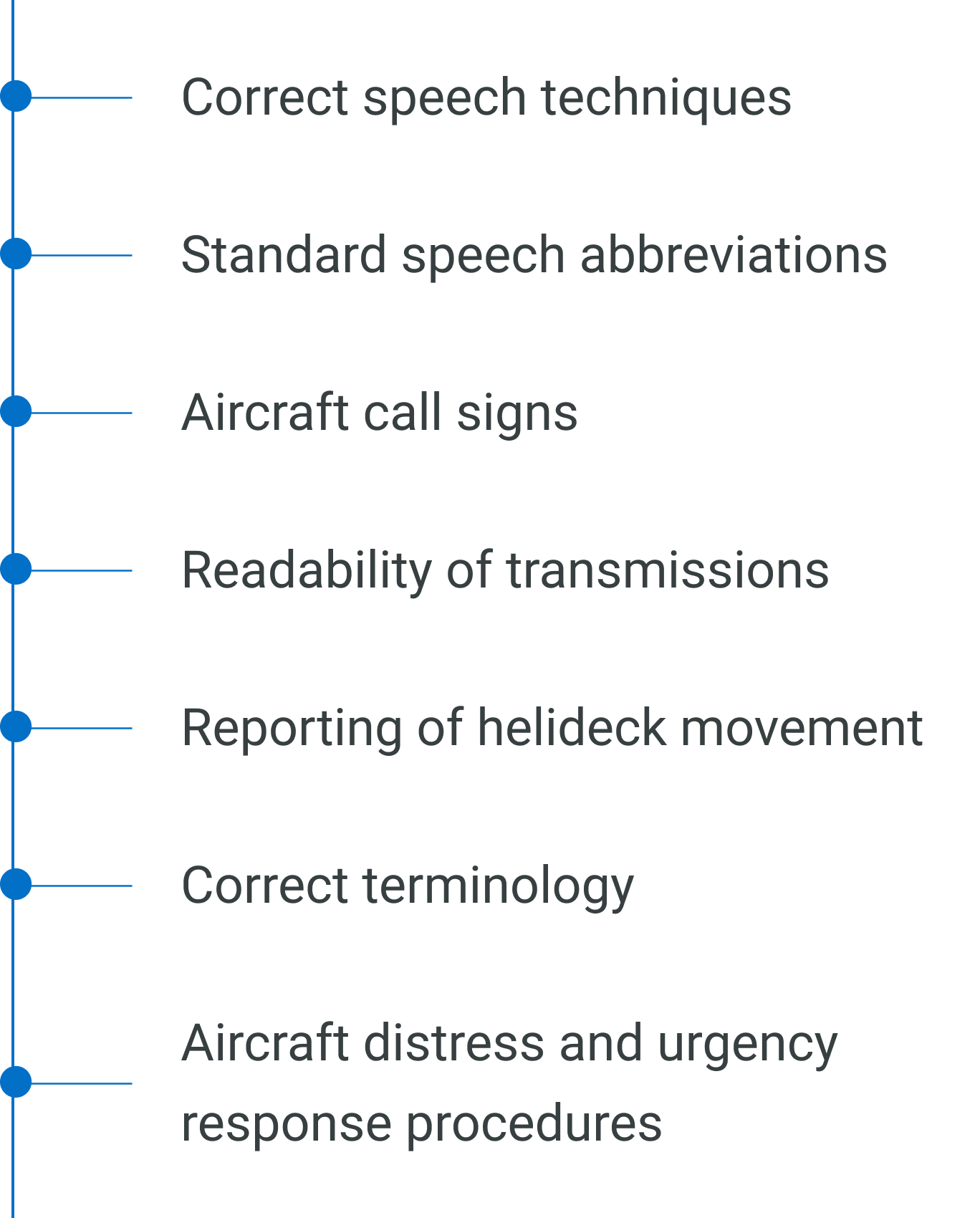
Through the first day of a course, we will review various topics covering communication with the helicopters offshore, including:
Fees and Costs
Payments
3600 PLN (brutto)
Price includes application fee to the CAA (£48 as of March 2025 + shipping fee)
Lunch and refreshments included
Payment can be made prior to the course date by bank transfer. Bank details will be provided after signing up for the training
Invoices will be provided on request
Fees and Costs
3600 PLN (brutto)
Price includes application fee to the CAA (£45 as of January 2025 + shipping fee)
Lunch and refreshments included
Payments
Payment can be made prior to the course date by bank transfer. Bank details will be provided after signing up for the training
Invoices will be provided on request
Course dates and timings can be checked below. We can deliver the course and the exam or just an exam on request not only in Poland but in any place where you would require it, depending on availability. Payment for such training is by arrangement.
Minimum participants: for courses run in Szczecin – 1 student; for courses run in Gdańsk – 2 students
There is no date which suits you, ask us for private arrangements.
About our assessor
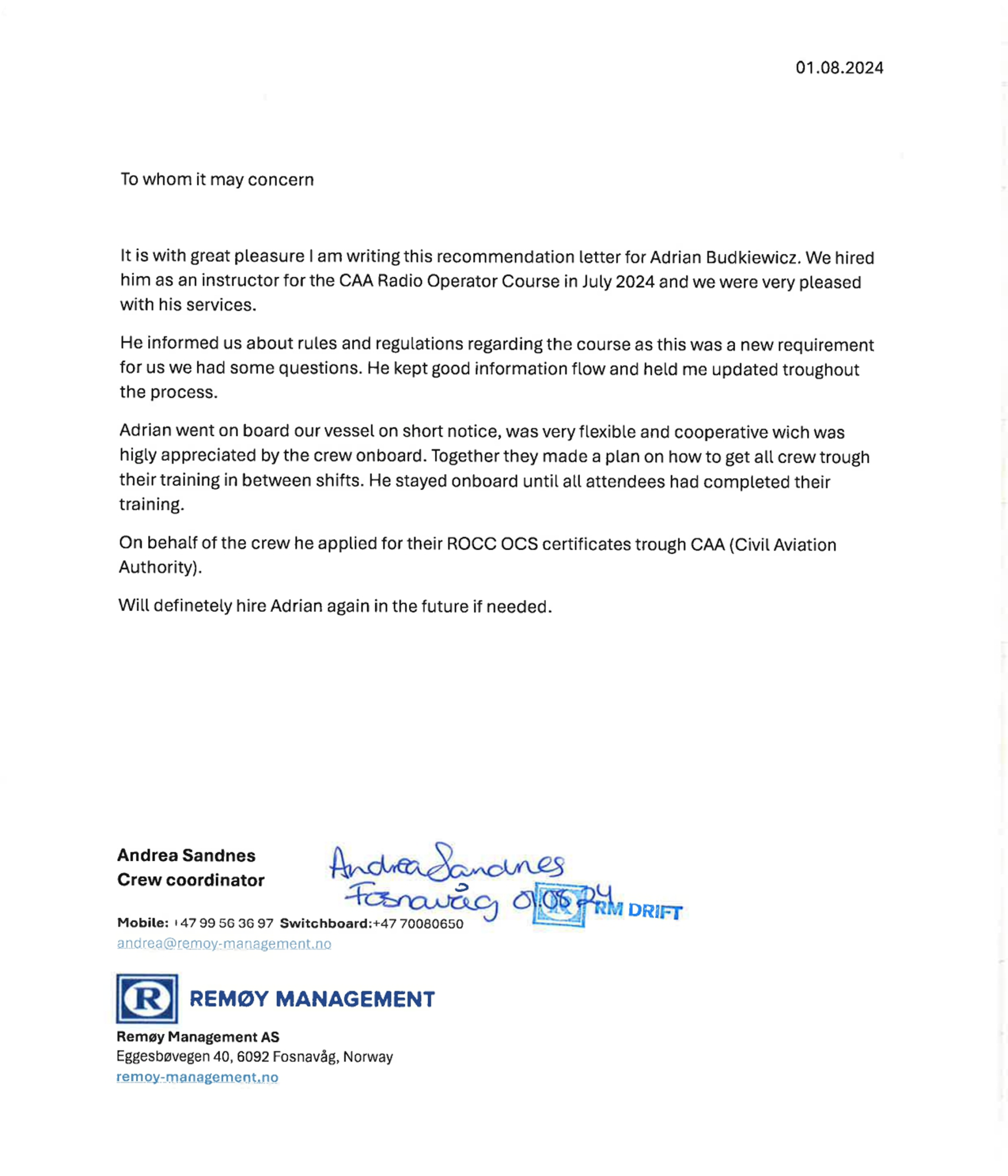
Our assessor, Adrian Budkiewicz is an experienced person. Working in the North Sea since 2014 on various vessels and marine positions.
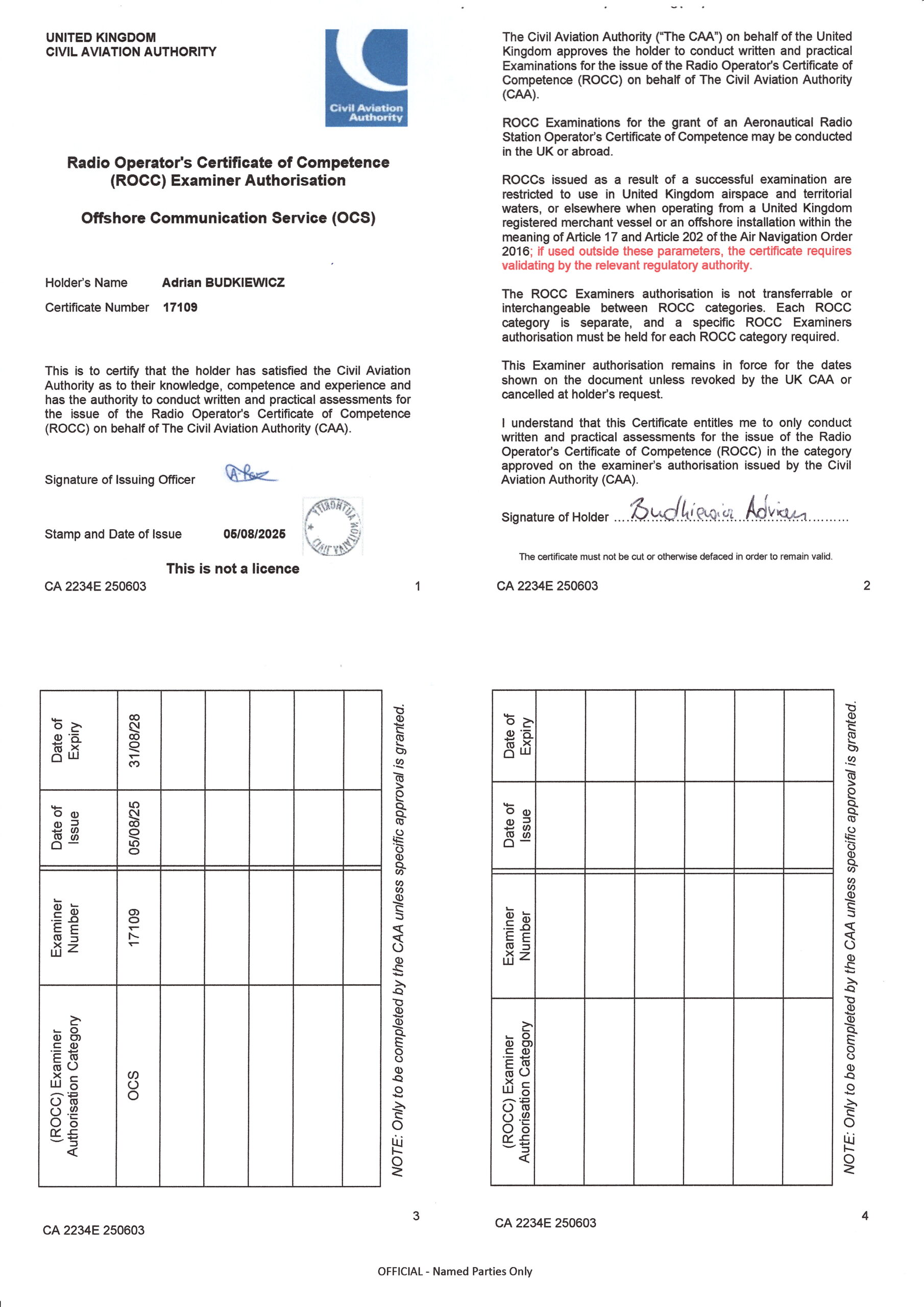
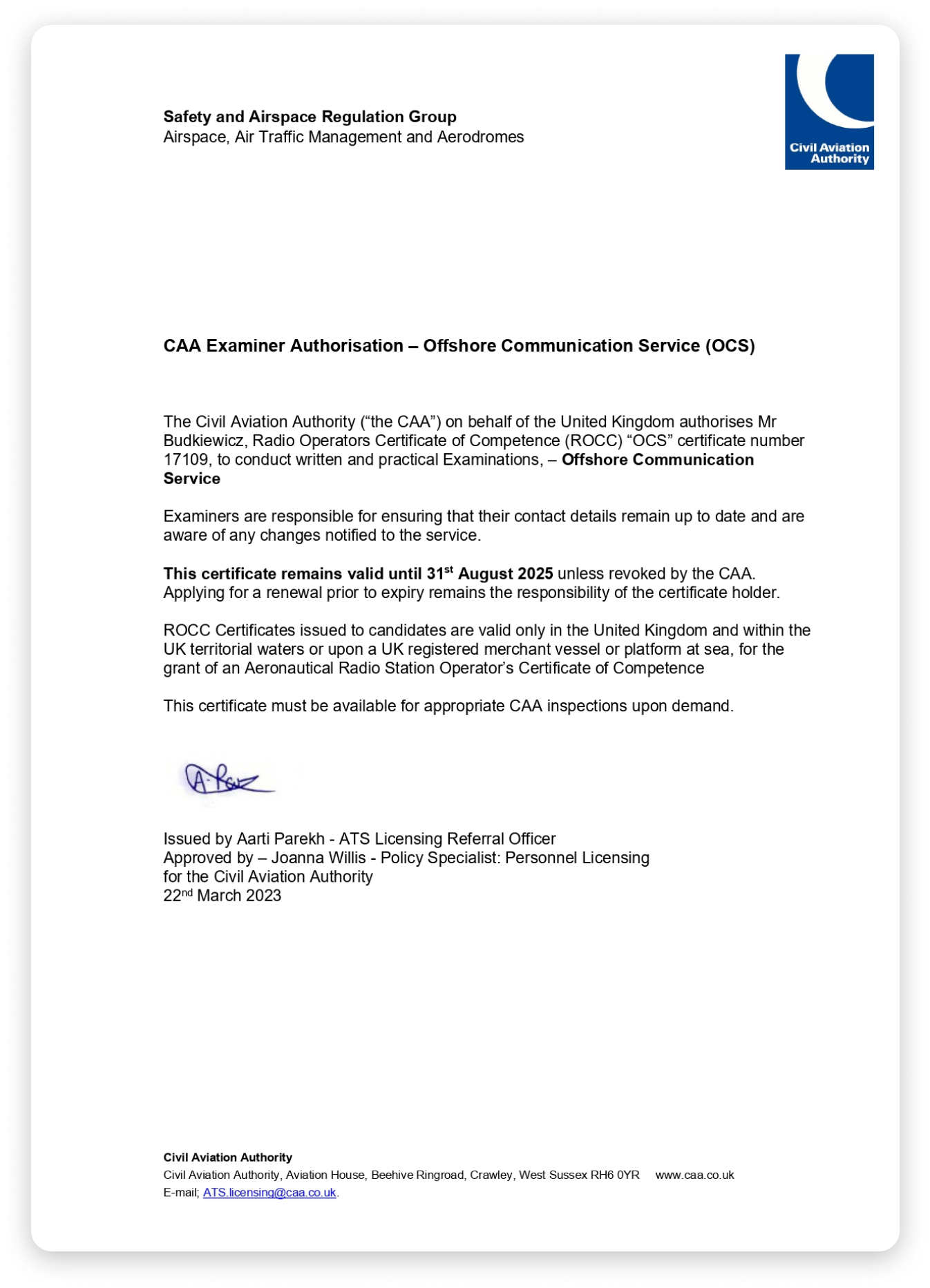
He is authorized by the Civil Aviation Authority (CAA) to conduct written and practical Examinations – Offshore Communication Service.

Reviews